
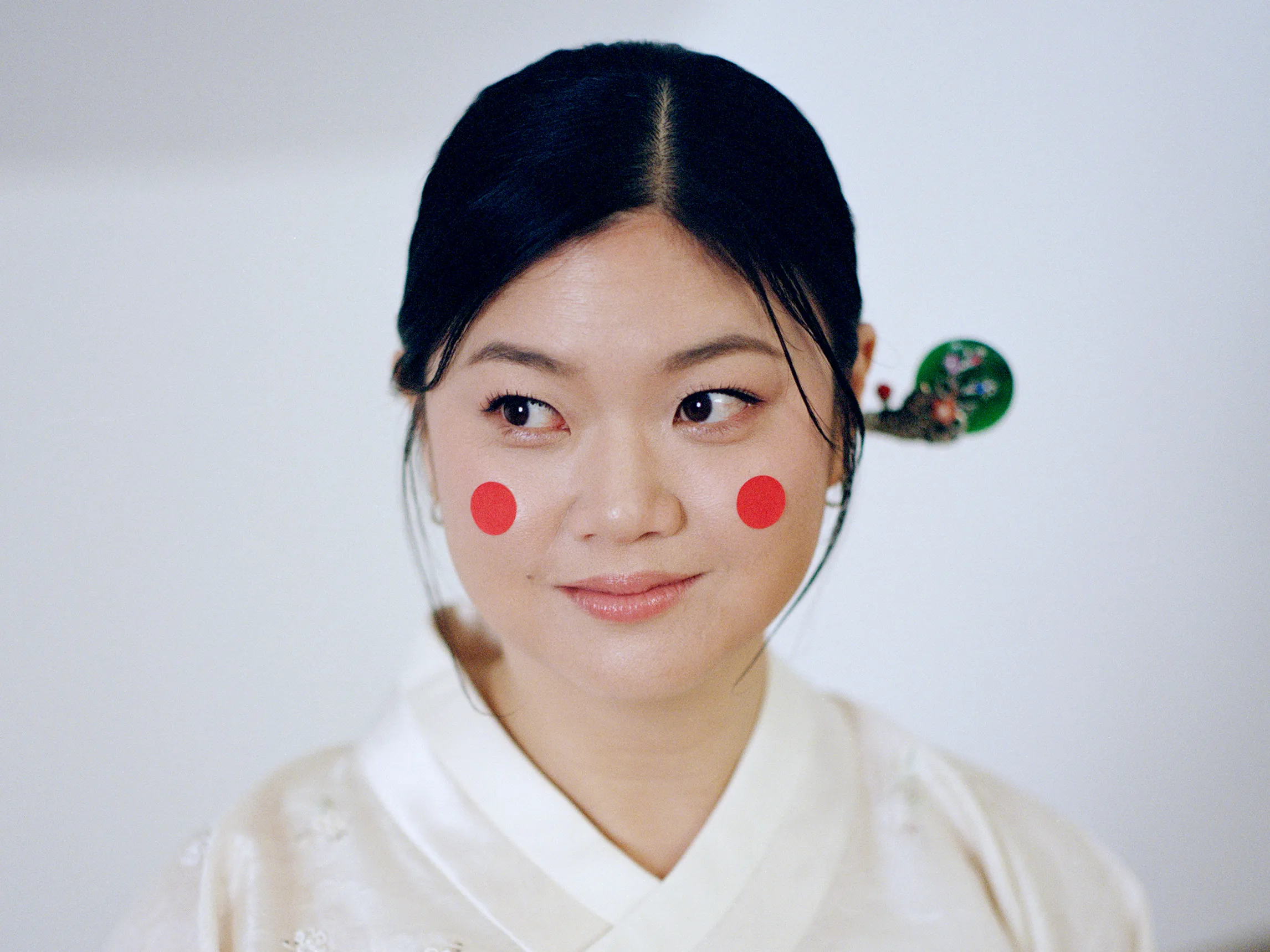
Joseon beauty ideals prized pale, flawless skin as a sign of nobility and virtue—no sun exposure for upper-class women. Makeup emphasized purity, youth, and protection from evil.
Red accents symbolized good fortune, warding off spirits, and vitality. Brides wore yeonji (red spots) on cheeks and sometimes lips, created with safflower-derived pigment or paper stickers in later periods.
Hair was elaborately upswept with jokduri (crown) or binyeo (hairpin), framing a serene, composed face.
The Yeonji Gonji: The Signature Red Dots
These circular red marks on both cheeks are the most recognizable feature. Historically, they protected the bride from malevolent forces during her vulnerable transition to married life.
In Joseon times, pigment came from natural sources like safflower (yeonji), applied delicately for a playful yet auspicious touch.
Today, makeup artists use modern creams, gels, or even stickers for precision and longevity—ensuring the dots stay vibrant through bows and photos.
I once attended a Korean-American friend’s paebaek in California. Seeing those bold red dots pop against her dewy skin felt timeless—like stepping into a historical painting, yet totally celebratory.
Flawless Porcelain Skin and Subtle Flush
Even skin tone was non-negotiable. Women used rice powder or white lead (dangerous by today’s standards) for that ghostly pale canvas.
Modern versions rely on Korean skincare heroes: cushion foundations, essences, and highlighters for glass-skin glow without heaviness.
A light cheek flush ties into the yeonji, adding youthful warmth—think sheer berry tints layered under the red dots.
Red Lips and Minimal Eye Makeup
Lips got a red stain or bold application, echoing the cheek dots for harmony.
Eyes stayed understated—defined brows (once drawn with charcoal) and perhaps a touch of liner—keeping focus on the face’s overall purity.
Contemporary brides soften this: gradient lips or tinted balms maintain tradition without feeling costume-like.
How the Paebaek Ceremony Brings It All Together
The paebaek happens after the main wedding, often at home or a venue. Bride and groom in hanbok perform deep bows to parents and in-laws, serve tea, and receive blessings.
This 30-minute ritual demands full traditional attire: vibrant hanbok (red for bride, blue for groom), jokduri headdress, and the complete Joseon-inspired makeup.
It’s intimate, family-focused—contrasting the often lavish Western-style ceremony earlier in the day.
Modern Revival: Why Brides Are Bringing It Back
Globalization and K-culture (dramas, K-beauty) spark pride in heritage. Korean-American brides want meaningful nods to roots amid fusion weddings.
Makeup artists like Sarah Ahn note clients request Western looks for vows, then switch to traditional for paebaek—double the beauty moments!
Social media amplifies it: Instagram and TikTok show stunning before-and-afters, inspiring more to try yeonji gonji.
It’s emotional too—many brides say it connects them to grandmothers or unseen ancestors.
One bride shared how applying the red dots felt like carrying family strength into her new chapter. Goosebumps.
How Today’s Makeup Artists Adapt the Look
Pros use long-wear formulas to survive tears, hugs, and humidity.
They customize: softer dots for subtle vibes, or bolder for dramatic photos.
Skincare prep is huge—hydrated base lets minimal makeup shine.
- Tools and Products:
- Dewy foundation or BB cream for glass skin
- Red cream blush/gel for precise yeonji
- Matte red lip tint for longevity
- Brow pencil for sharp, natural arches
Many artists offer “paebaek packages” with quick changes.
Pros and Cons of Embracing the Joseon Look
Pros:
- Deep cultural connection and unique photos
- Playful, youthful energy from red accents
- Stands out in fusion weddings
- Relatively quick application compared to full glam
- Symbolic protection and good luck
Cons:
- Can feel theatrical if not balanced
- Red dots may photograph starkly under certain lights
- Not everyone loves pale base in modern trends
- Requires skilled artist to avoid clownish effect
- Time for outfit/makeup change mid-event
Most brides find the payoff worth it—heritage preserved with joy.
Comparison: Traditional Joseon Bridal Look vs. Modern Adaptations
| Element | Joseon Era (Historical) | Modern Revival (2020s) |
|---|---|---|
| Skin Tone | Stark white (rice powder/lead) | Dewy glass skin (K-beauty products) |
| Cheek Accents | Yeonji gonji in natural pigment | Precise red dots via cream/gel/stickers |
| Lips | Bold red stain | Gradient or sheer red for softness |
| Eyes/Brows | Minimal, charcoal brows | Defined brows, subtle shadow if desired |
| Overall Vibe | Regal, protected, solemn | Youthful, playful, celebratory |
| Context | Full traditional ceremony | Often paebaek only, after Western ceremony |
The evolution keeps essence while fitting busy, multicultural lives.
Where to Experience or Book This Look
Seek Korean bridal specialists in cities with large Korean communities: Seoul, Los Angeles, New York, Toronto.
Look for “paebaek makeup” or “traditional Korean bridal” on Instagram—tags like #yeonjigonji or #paebaekbride.
In Korea, wedding studios offer full packages including hanbok rental and makeup.
For diaspora brides, artists trained in K-beauty adapt seamlessly.
People Also Ask (PAA)
What are the red dots on Korean brides’ cheeks? They’re called yeonji gonji, traditional red spots symbolizing protection from evil spirits and youthfulness—still popular in modern paebaek ceremonies.
What is paebaek in Korean weddings? A post-wedding ritual where the couple in hanbok bows to elders and serves tea, honoring family—often featuring Joseon-era beauty and attire.
Do modern Korean brides wear hanbok? Yes, especially for paebaek or full traditional ceremonies, though many opt for Western white dresses earlier in the day.
What is traditional Korean bridal makeup? Flawless pale skin, red yeonji gonji dots on cheeks, red lips, and minimal eyes—emphasizing purity and auspiciousness from Joseon times.
Why do Korean brides have red on their face? Red wards off evil, brings luck, and represents vitality—rooted in centuries-old beliefs still cherished today.
FAQ
How do I get the yeonji gonji look for my wedding? Book a Korean bridal makeup artist experienced in paebaek; they use safe, modern reds and can customize size/intensity.
Is the Joseon bridal makeup hard to wear all day? For paebaek (short ritual), it’s comfortable; pros use transfer-proof products so it lasts through photos and greetings.
Can non-Korean brides try this look? Absolutely—many fusion or culturally curious couples incorporate yeonji gonji as a fun, meaningful element.
Where can I buy products for DIY Joseon-inspired makeup? K-beauty brands like Innisfree, Etude House, or The Saem offer red tints and dewy bases—search “Korean bridal makeup kit.”
Does this tradition still exist in South Korea? Yes, though less common in everyday weddings; it’s revived for cultural pride, heritage events, or diaspora celebrations.
Seeing modern brides rock yeonji gonji warms my heart—it’s proof traditions evolve without fading. They take something from the 1300s and make it feel alive, personal, joyful. If you’re planning a wedding with Korean roots, consider adding this touch. It might just become your favorite memory.
(Word count: ~2,720)

Leave a Reply